
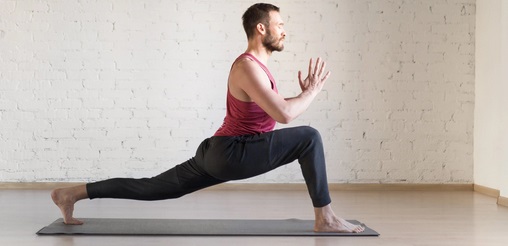
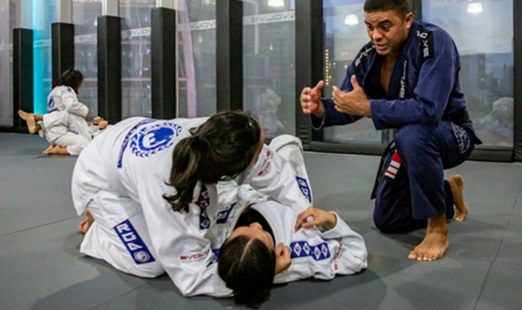
Brazilian Jiu-Jitsu requires attention, balance, controlled transitions and the ability to change direction. Yoga can be used as a supplementary practice for these qualities, but it does not replace technical BJJ instruction.
Navigator
Attention Before Intensity
Begin with quiet standing or seated breathing. Notice the contact of the feet or sitting bones, the direction of the spine and whether the breath remains ordinary. This creates a clear starting point before movement.
Breathing Under Moderate Effort
Use simple yoga movements while keeping the breath unforced. When breathing becomes strained, reduce the range or pause. This is a pacing skill, not a promise of improved competition results.
Balance and Direction Changes
Standing poses can be used to practise weight transfer, a steady gaze and a controlled return to neutral. A wall is appropriate when balance is uncertain.
Mobility Without Forcing
Low lunges, supported hip movements and gentle spinal rotation can help a practitioner explore range. Avoid pushing into the knees, neck or lower back.
A Short Supplementary Sequence
- Tadasana with natural breathing.
- Slow Kati Chakrasana through a comfortable range.
- Low lunge with blocks.
- Chair-supported balance work.
- Supported seated breathing and rest.
Practice Limits
Yoga cannot remove the risks of a combat sport. Use it as a separate skills practice, leave enough recovery time between demanding sessions and learn unfamiliar postures from a qualified yoga teacher.