
Editorial update: This legacy advanced upward-couch backbend article has been rewritten as general yoga education with clearer alignment, modifications and safety limits. It has not been individually medically reviewed. Individual yoga-teacher review remains pending. Read the health-information disclaimer before practising.
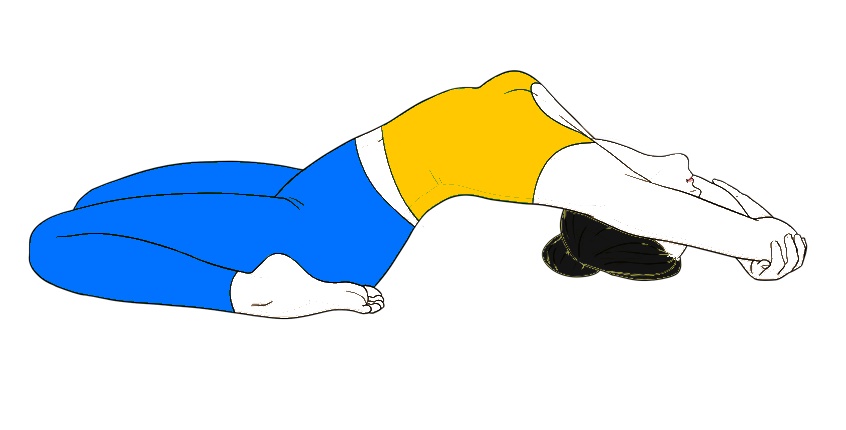
Urdhva Paryankasana, translated here as Upward Couch Pose, is an advanced supine backbend. Naming and setup can vary across yoga lineages. In this guide, the pose is treated as a lifted bridge-like shape in which the feet and upper body support the pelvis and chest.
The position can place substantial demand on the spine, shoulders, neck, knees and feet. It should be learned with a qualified teacher who can confirm the version being practised.
Navigator
Naming and Practice Context
Paryankasana is also used for other couch-pose variations, including reclining kneeling backbends. Do not combine instructions from different versions. Follow one clear method from a teacher and use the title of the pose only as a general reference.
Prerequisites Before Urdhva Paryankasana
- A pain-free supported Bridge Pose with steady breathing.
- Comfortable shoulder extension and chest lift without compressing the neck.
- Ability to keep the knees tracking forward and the feet stable.
- Controlled entry and exit from a moderate backbend.
- Direct teacher supervision for any version that moves weight toward the head or neck.
Teacher-Led Upward Couch Progression
- Lie on the back with the knees bent and feet placed comfortably near the sitting bones.
- Keep the arms beside the body and establish a neutral neck.
- Exhale and lift into a moderate Bridge Pose without turning the head.
- Press the upper arms and feet down while lifting the chest away from the chin.
- Under teacher guidance, adjust the feet only if the knees remain stable and the lower back feels spacious.
- Keep weight distributed through the feet, shoulders and upper arms rather than pressing into the neck.
- Stay for one or two natural breaths.
- Return the feet to a stable position if they were adjusted, then lower the spine gradually.
- Rest with the knees bent before changing position.
Supported Preparation Options
- Practise Bridge Pose with both feet grounded and hands beside the body.
- Place a firm bolster lengthwise under the upper back for a passive chest-opening preparation.
- Use a yoga block under the sacrum for Supported Bridge Pose, provided it is comfortable and stable.
- Keep the pelvis lower and focus on length through the front of the body.
- Use a wall to help keep the feet from sliding.
- Skip the advanced version and remain with a supported bridge when neck or shoulder loading is uncertain.
Shoulder, Neck and Foot Safety
- Never turn the head while the pelvis is lifted.
- Keep the back of the neck long and avoid forcing the chin tightly into the chest.
- Do not place the crown of the head down unless a qualified teacher is teaching a specific lineage variation.
- Keep the feet parallel enough for the knees to track comfortably.
- Stop if the feet slip, the breath is restricted or the neck feels compressed.
Common Mistakes
- Attempting the final pose without a stable Bridge Pose.
- Walking the feet too close and compressing the knees or lower back.
- Pushing strongly through the head or neck.
- Letting the knees spread wider than the feet.
- Holding the breath to keep the chest lifted.
- Dropping out of the pose quickly.
Possible Practice Benefits
With appropriate instruction, the pose may develop awareness of backbend distribution, leg and shoulder support, chest lift and controlled transitions. A supported bridge may offer a more suitable way to explore similar actions for many practitioners.
Urdhva Paryankasana should not be used as a treatment for thyroid, respiratory, cardiovascular, digestive or spinal conditions.
Precautions and When to Avoid
- Avoid the full pose with current neck, shoulder, back, knee, ankle or foot pain.
- Do not practise after recent spinal, abdominal, shoulder or knee surgery without personalised professional guidance.
- People with dizziness, balance problems or symptoms affected by inversion or backbending need an appropriate alternative.
- Pregnant practitioners should use pregnancy-specific guidance and avoid unsupported deep backbends.
- Stop immediately for sharp pain, numbness, headache, visual disturbance, dizziness or breathing difficulty.
Frequently Asked Questions
Is Urdhva Paryankasana the same as Paryankasana?
The names and shapes can differ between lineages. Confirm the exact version with your teacher rather than combining separate instructions.
Should the head carry weight?
No. This guide keeps the head and neck free from direct loading. A lineage-specific head position requires in-person teacher guidance.
Can beginners practise this pose?
Beginners should use Bridge Pose or Supported Bridge instead of the advanced upward-couch variation.
Related SarvYoga Guides
Safety Reference
The National Center for Complementary and Integrative Health advises practising yoga properly with qualified guidance and notes that some people may need individual instruction or modifications. See Yoga: Effectiveness and Safety.
Last editorial update: August 5, 2026. Individual yoga-teacher review remains pending.
very good information. thank you