
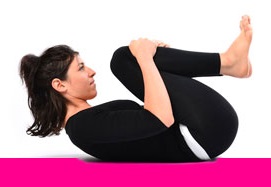
Pawanmuktasana, also written Pavanamuktasana, is a supine knee-to-chest posture. The Sanskrit name is traditionally translated as Wind-Relieving Pose. It can be practised with one knee at a time or with both knees together.
The pose should feel like a comfortable folding action at the hips, not a forced compression of the abdomen or neck. The head may remain on the floor, especially for beginners or anyone with neck sensitivity.
Navigator
Pawanmuktasana Practice Options
- Single-knee version: one knee comes toward the torso while the other leg stays bent or extended.
- Double-knee version: both knees move toward the torso together.
- Head-down version: the head and shoulders remain fully supported.
- Head-lift variation: the head lifts toward the knees only when the neck remains comfortable.
- Rocking variation: a very small side-to-side movement may be used for relaxation, not as a forceful massage.
Single-Knee Pawanmuktasana Steps
- Lie on the back with both knees bent and the feet on the floor.
- Draw the right knee toward the torso.
- Hold behind the thigh or across the upper shin. Avoid pulling directly on the kneecap.
- Keep the left foot grounded, or extend the left leg only if the lower back stays comfortable.
- Exhale and bring the thigh slightly closer without forcing it.
- Keep the shoulders, jaw and throat relaxed.
- Take two or three easy breaths, release the foot to the floor and change sides.
Double-Knee Pawanmuktasana Steps
- Begin on the back with both knees bent.
- Bring one knee and then the other toward the torso.
- Hold behind the thighs or around the shins, depending on comfort.
- Exhale and allow the thighs to move closer while the lower back broadens toward the mat.
- Keep the head down, or lift it only if the neck remains easy.
- Breathe naturally for a short hold.
- Release one foot and then the other to the floor with control.
Head-Down and Supported Modifications
- Keep the head on a folded blanket when the neck feels strained.
- Hold behind the thighs instead of clasping the shins.
- Use one knee at a time if bringing both legs in feels too strong.
- Keep the opposite knee bent with the foot grounded rather than extending the leg.
- Place a strap behind the thigh when the hands do not reach comfortably.
- Use a smaller hip bend after recent inactivity and increase only within comfort.
Breathing and Alignment
- Exhale as the knee moves closer; inhale without losing the comfortable shape.
- Keep the shoulders broad and the elbows relaxed.
- Let the pelvis stay heavy rather than curling aggressively off the floor.
- Avoid pressing the thigh so strongly that the breath is restricted.
- Keep the extended-leg heel active only if that does not increase back tension.
- Release slowly to avoid a sudden pull through the lower back.
Common Mistakes
- Pulling on the kneecap instead of supporting the thigh or shin.
- Forcing both knees in when a single-leg version is more comfortable.
- Lifting the head and straining the neck.
- Holding the breath during abdominal compression.
- Extending the opposite leg while the lower back arches or hurts.
- Dropping the legs quickly when leaving the pose.
Possible Practice Benefits
Pawanmuktasana may provide a gentle hip-folding movement, awareness of the lower back and coordinated breathing. Some people find the supported shape comfortable after standing or seated practice. These are practice observations, not guaranteed medical outcomes.
The pose should not be described as a Keep this explanation focused on yoga practice, movement, breathing and comfortable awareness rather than medical outcomes..
Precautions and When to Modify
- Use the single-knee version or avoid the pose during acute lower-back, hip or abdominal pain.
- Do not strongly compress the abdomen after recent abdominal surgery or with a current hernia unless a qualified professional has approved an individual version.
- Pregnant practitioners need an appropriate non-compressive alternative.
- Keep the head down with neck pain, headache or dizziness.
- Stop for sharp pain, numbness, tingling, nausea or restricted breathing.
Frequently Asked Questions
Must the nose touch the knee?
No. The head can remain on the floor. Lifting the head is optional and should not strain the neck.
Should both legs be used together?
Not necessarily. The single-knee version is often easier to control and may be more comfortable for the lower back.
How long should the pose be held?
A few natural breaths are sufficient for general practice. Comfort and steady breathing matter more than a long hold.
Related SarvYoga Guides
Safety Reference
The National Center for Complementary and Integrative Health advises practising yoga properly with qualified guidance and notes that some people may need individual instruction or modifications. See Yoga: Effectiveness and Safety.