
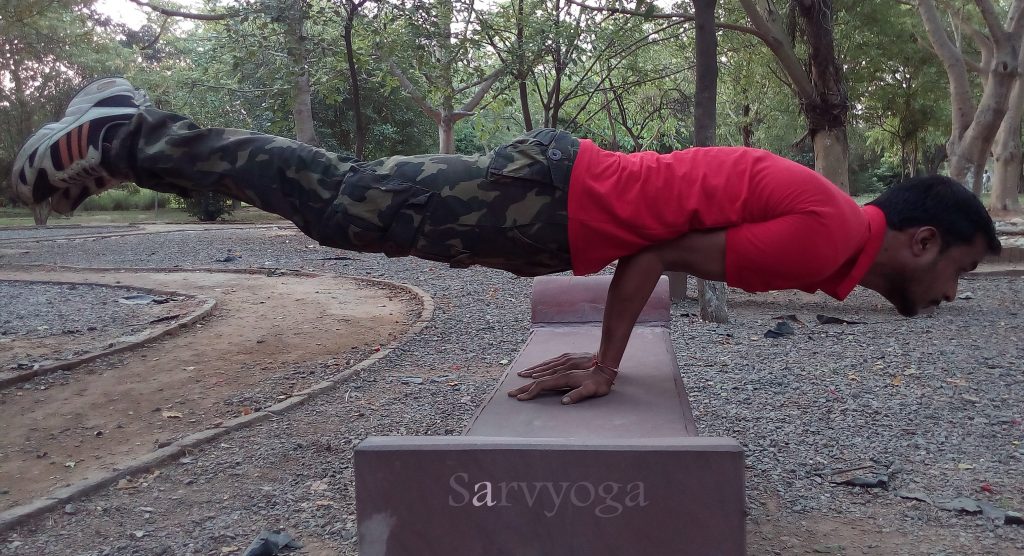
Mayurasana, or Peacock Pose, is an advanced arm balance in which the torso and legs extend horizontally while the body is supported by the hands and bent elbows. The Sanskrit word mayura means peacock. The posture requires specific wrist range, compact elbow placement, whole-body coordination and a controlled exit.
Mayurasana is not a beginner pose and should not be learned by repeatedly falling forward. Preparation can remain at the kneeling, elbow-placement or supported weight-shift stage for as long as needed. Direct guidance from a qualified yoga teacher is strongly recommended.


Navigator
Understand the Base
The hands turn so the fingers point back toward the knees or slightly outward, depending on wrist range. The elbows bend and draw toward one another. In the classical arrangement, the elbows support the front of the torso while the legs extend back. Small changes in elbow width or hand angle greatly affect balance.
Preparation Before Balancing
- Warm the wrists with gentle flexion, extension and weight shifts.
- Practise hands-and-knees positions with the palms evenly grounded.
- Learn a short plank with the shoulders organised above the hands.
- Practise drawing the elbows inward without squeezing them painfully.
- Place a bolster or firm cushions in front of the body.
- Clear the area around the mat and remove hard objects.
Elbow and Hand Placement
Kneel with the knees apart. Place the palms on the floor with the fingers pointing toward the knees or diagonally outward. Keep the whole palm connected, especially the bases of the index fingers and thumbs. Bend the elbows and bring them toward the midline. Their exact contact depends on body proportions; avoid pressing into a point that feels sharp or unstable.
Teacher-Led Step-by-Step Mayurasana
- Arrange the hands and elbows from a wide kneeling base.
- Lean the torso forward until the elbows make steady contact.
- Lower the forehead onto a bolster or block arrangement.
- Walk the knees back and extend one leg at a time.
- Keep the toes on the floor while lengthening the body.
- Shift forward by a very small amount and observe the hand pressure.
- If the base stays steady, lift one foot briefly and replace it.
- Only with direct guidance, explore lifting both feet as the torso and legs lengthen in opposite directions.
- Keep the gaze slightly forward without throwing the head back.
- Lower the feet, bend the knees and return to kneeling with control.
Supported Stages
- Forehead support: keep the head on a bolster while learning the elbow position.
- Toes grounded: extend both legs but keep the toes on the floor.
- One-leg lift: lift one foot at a time for a moment.
- Strap around upper arms: use only with a teacher to keep the elbows from separating.
- Block under the feet: raise the starting position so the forward shift is smaller.
A supported stage is a complete practice. Progress is measured by steadiness and control, not by whether both feet leave the floor.
Whole-Body Alignment
Press through the palms and lengthen from the crown of the head through the heels. Keep the legs active and close together without hardening the jaw or holding the breath. The shoulders move forward of the wrists, but they should not collapse toward the floor. The lift comes from a coordinated forward shift and leg extension rather than a jump.
Breathing and Duration
Use natural breathing during preparation. Do not hold the breath in order to force the balance. Initial lifts should be brief enough that the exit remains deliberate. Rest the wrists between attempts and reduce repetitions when the hand base becomes less even.
Common Mistakes
- Jumping the feet from the floor.
- Turning the hands beyond the available wrist range.
- Letting the elbows spread before the weight shift begins.
- Placing hard support directly beneath the face.
- Holding the breath and tightening the jaw.
- Continuing after the wrists, elbows or shoulders lose steadiness.
- Attempting the full balance without learning a controlled exit.
Practice Effects
Mayurasana develops detailed awareness of hand pressure, elbow organisation, horizontal body alignment and the timing of an arm balance. Its staged practice also teaches when to remain with preparation rather than pursue the final shape. These are learning effects, not promised outcomes.
Practice Limits and Teacher Guidance
Do not continue for sharp discomfort, tingling, numbness, joint pressure, loss of hand contact or an uncontrolled forward fall. Return to a hands-and-knees position and rest. Because the balance places substantial demand on the wrists, elbows and shoulders, learn it with a qualified yoga teacher who can position support and manage the exit.
Frequently Asked Questions
Is Mayurasana suitable for beginners?
No. Beginners can build general wrist and shoulder awareness without attempting the full balance.
Should the feet jump upward?
No. The feet lift through a controlled forward shift and coordinated leg extension.
Can the head stay supported?
Yes. Forehead support is a useful learning stage when it is stable and arranged by a teacher.
It was very good & informative but breathing not explained